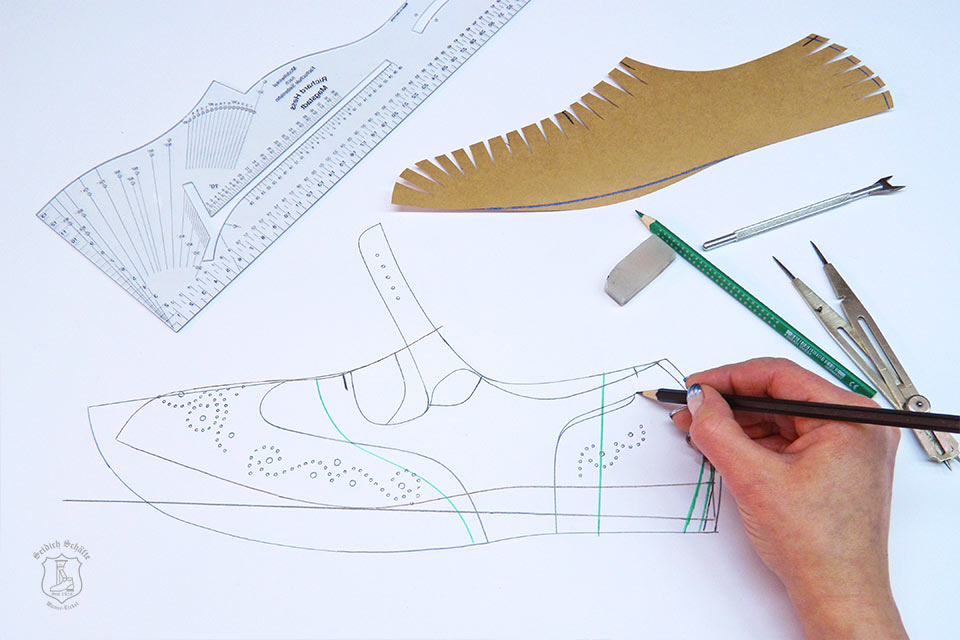
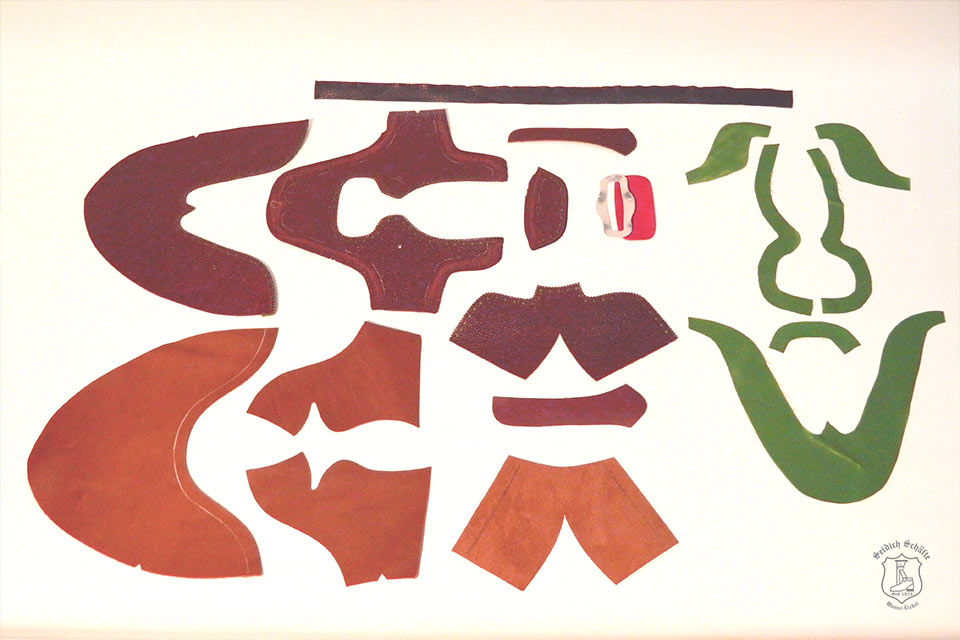
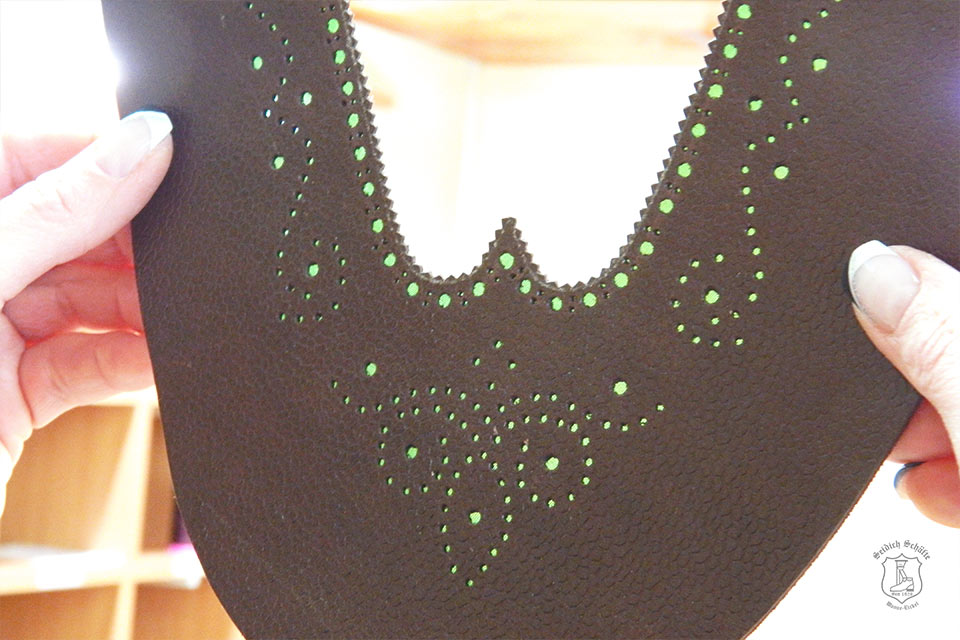
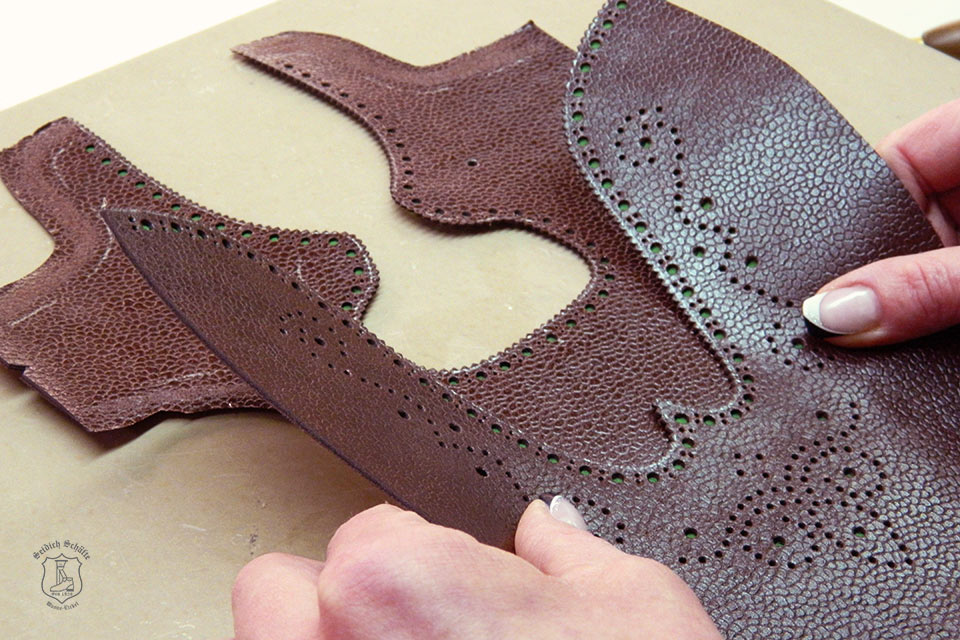
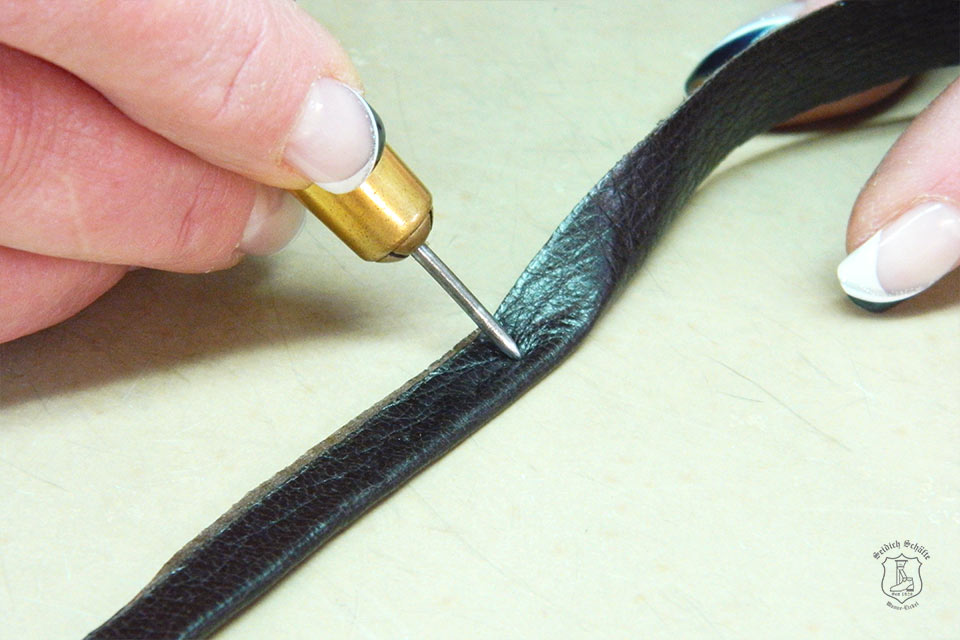
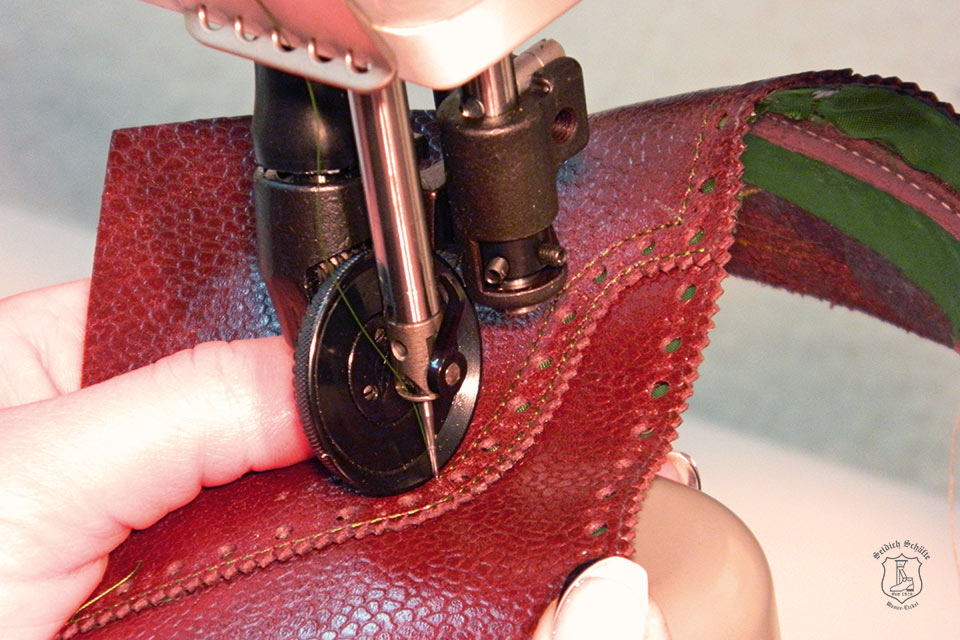
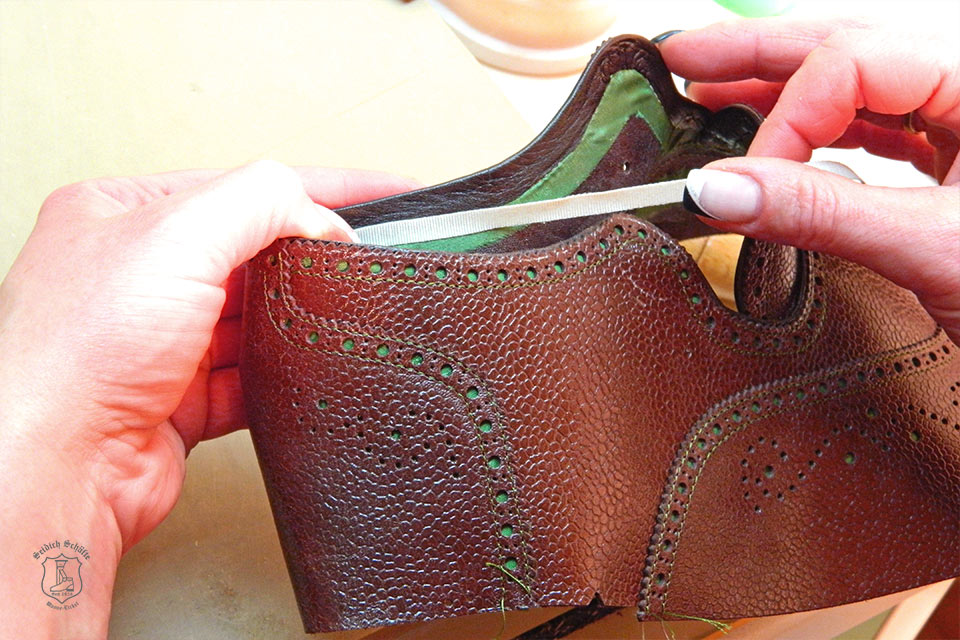
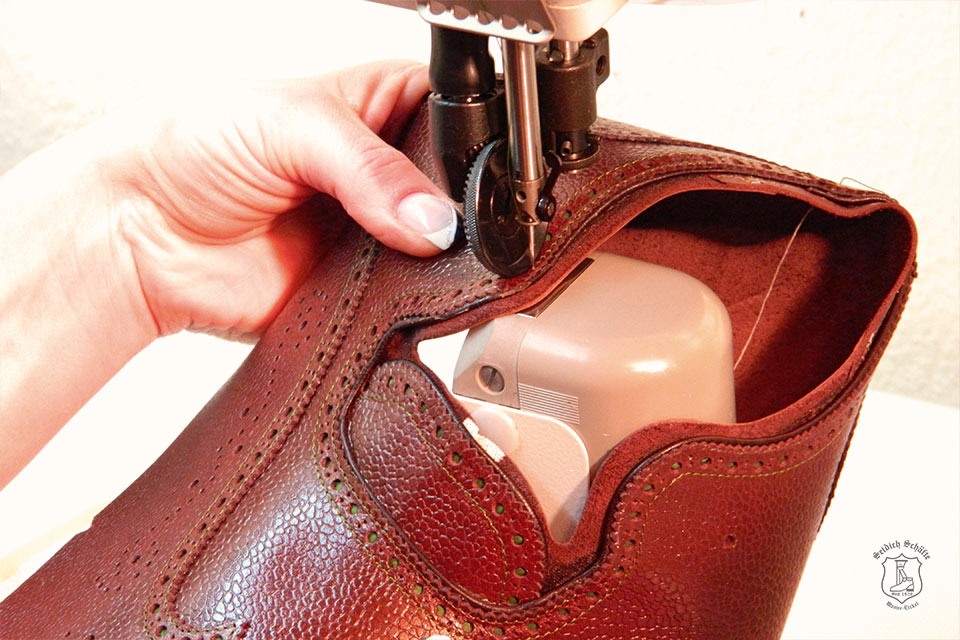
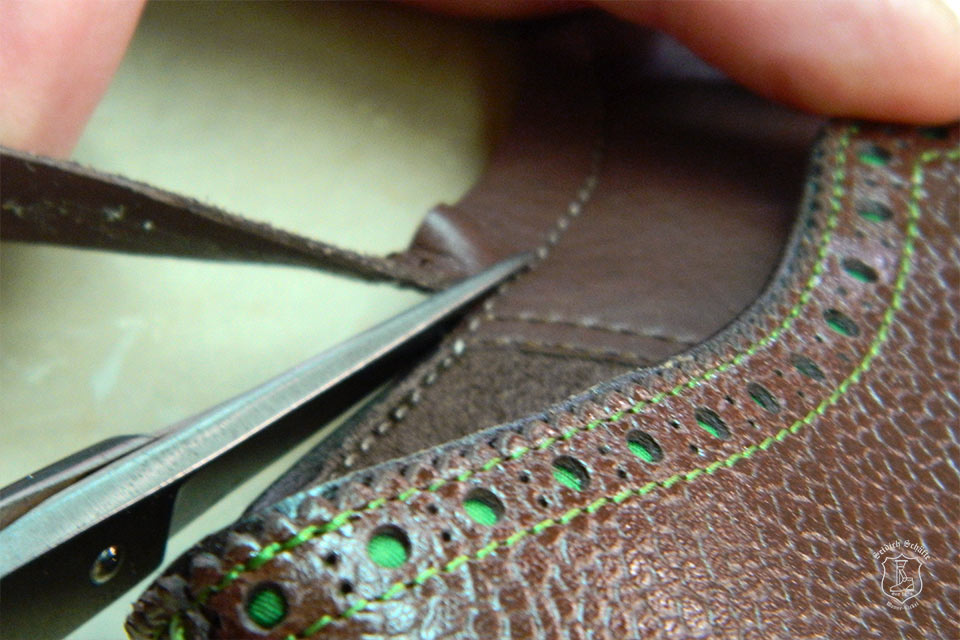
The upper part of a shoe, which makes up about 90% of what is visible at first glance, is called the upper. In fact, you could say that a shoemaker tailors clothes for the feet. Like a tailor, he creates patterns based on the measurements of the feet, cuts leather and fabric, and sews them together into a three-dimensional structure.
They have to be extremely precise. Unlike with fabrics, there are no second chances with leather. Once sewn, the sewing needle leaves holes in the expensive leather.
The difference in size between two shoe sizes is only 6.67 mm. A single upper consists of many elements, and if just four small errors with an inaccuracy of only about 1 mm creep in during the draughting, cutting or assembly of the many parts, the upper will end up being too small or too large. In addition, different leathers have very different properties – some are softer, some are firmer.
A uppermaker must take all of this into account so that the future wearers of the shoes can enjoy their handmade shoes for a long time to come.
Uppers (the top part of shoes) were sewn entirely by hand until around 1860. The introduction of the sewing machine in the second half of the 19th century quickly led to the industrial production of shoes in workshops and factories. Factory-made shoes had the advantage of being immediately available and customers could choose from a wide range of materials.
In order to compete with the shoe factories, shoemakers now had to work faster and purchase more and different types of leather and fabric. However, aquiring and maintaining a large selection of materials is very expensive for a small shoemaker, and the new sewing machines were previously unaffordable for many. This led to the establishment of upper factories that specialised in the manufacture of shoe uppers.
The two world wars in the 20th century, with approximately two million state-recognised war invalids on the German side alone, many of whom had injuries to their feet and legs, marked the birth of today’s orthopaedic shoe technology. Orthopaedic shoemakers were in high demand and the demand for uppers for orthopaedic footwear increased enormously. Although this led to the establishment of many new uppermaking businesses, unfortunately it did not result in uppermakers being given their own job description. Uppermakers repeatedly demanded the right to train others, but to no avail. Nevertheless, uppermakers only succeeded in obtaining their own job description (upper part repairer) in the former GDR and Austria. This made it almost impossible to train qualified young people in Germany.
At the end of the 1980s and beginning of the 1990s, the introduction of semi-industrial “ready-made uppers” led to the closure of many uppermaking workshops. In some cases, turnover fell by 70%. The BSE crisis led to an increase in the price of leather, while at the same time health insurance companies increased pressure on prices. Shoemakers were caught between a rock and a hard place. In 2015, only about 10% of shoe making workshops remained compared to 1980. Some of the surviving workshops invested in expensive digital technology in order to produce more efficiently and cost-effectively. Others relocated production to low-wage countries. Both approaches can have a negative impact on quality, but in the long term they lead to a loss of craftsmanship.
Today, outsourcing the entire production of orthopaedic shoes (upper and sole construction) to low-wage countries is the greatest threat to uppermaking workshops. This is because for every pair that is manufactured far away from Germany (or other west European country’s), there is no longer any need for an upper from domestic production. There is a danger that this will lead to the permanent loss of the last remaining supply structures of local uppermakers, leather merchants, tool manufacturers, etc.
At our suggestion, with a great deal of commitment and support from the Central Association of German Shoemakers (ZDS), the amendment of the shoemaker’s job description, with the resolution of the Conference of Ministers of Education and Cultural Affairs on 23 February 2018, succeeded in establishing upper construction as a training occupation in Germany for the first time.
The new job description is: “Custom shoemaker specialising in upper construction”.